
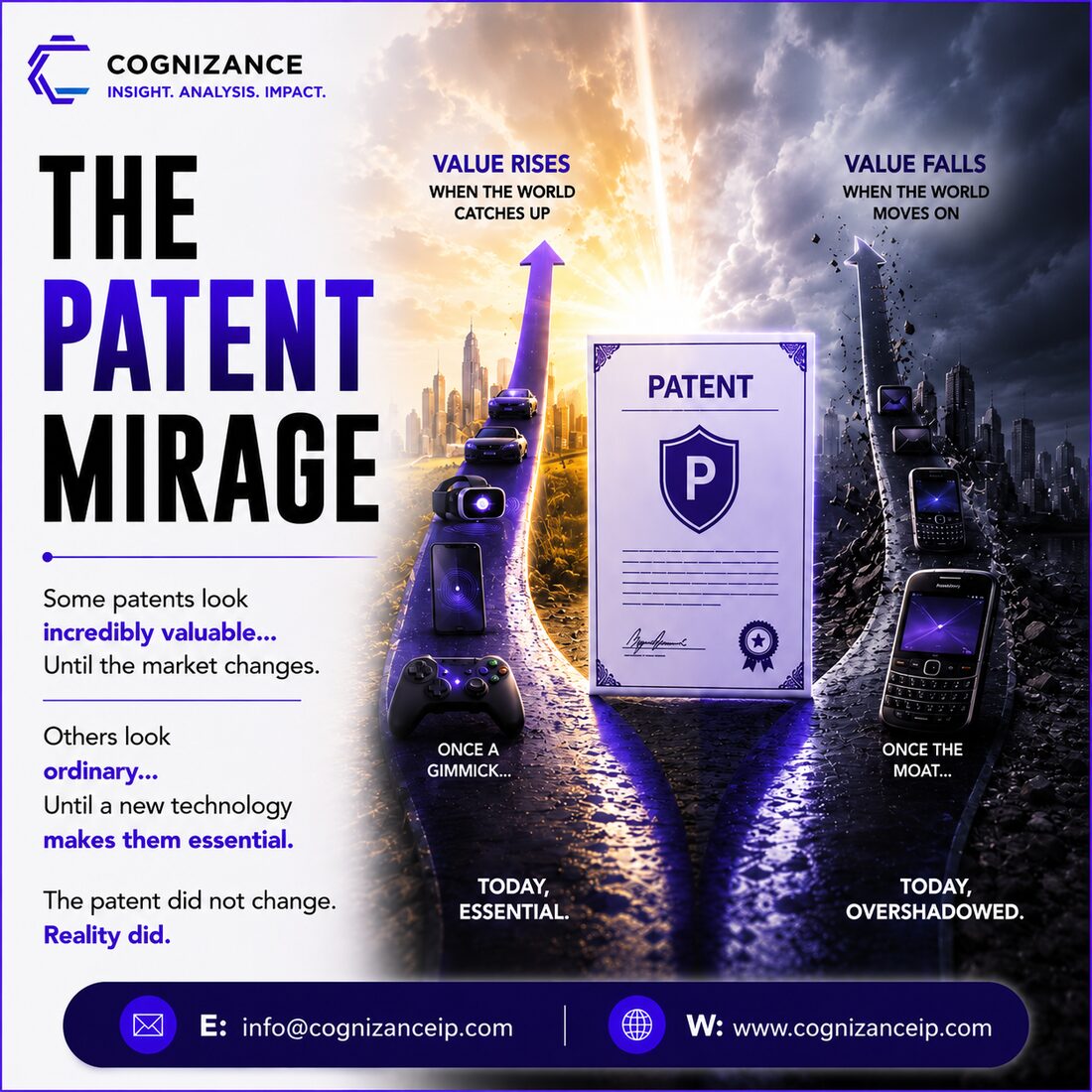
Some patents look incredibly valuable, until the market changes. Others look ordinary, until a new technology makes them essential. The patent did not change. Reality did.
Early 1990s. A company called Immersion patents "force feedback." Vibration in game controllers. A rumble pack for Nintendo joysticks. Everyone thought: cute gimmick.
Then smartphones and touch interfaces took off. Haptic feedback became a core part of the user experience. Sony fought Immersion in court and ultimately paid $97.2 million, along with ongoing royalties. Samsung, Microsoft and others entered licensing arrangements. Nintendo licensed it for the Switch.
Now flip it. BlackBerry. Early 2000s. Physical keyboard patents. Push email patents. These were the moat. In 2007 the iPhone launches. Touchscreens win. BlackBerry's patents did not get worse, the market shifted, reducing the commercial importance of what those patents protected.
Here is the twist nobody talks about. Those "dead" patents did not die. In 2023, BlackBerry sold over 35,000 of them to Malikie Innovations. Cash at closing. Royalties on top. Total deal value: up to $900 million.
One patent became more valuable because the market evolved. The other became less valuable for exactly the same reason. Patent value is not a number. It is a relationship, between the claim and the world outside it.
So next time someone hands you a "worthless" patent to shelve, ask what would have to change in the market for this patent to become essential.
Sometimes the sleeping giant is not sleeping. It's just waiting for the world to catch up.