
Model 8 · 5 min read
Second-Order Thinking on Patents
A patent is never a single event. It is the first domino.
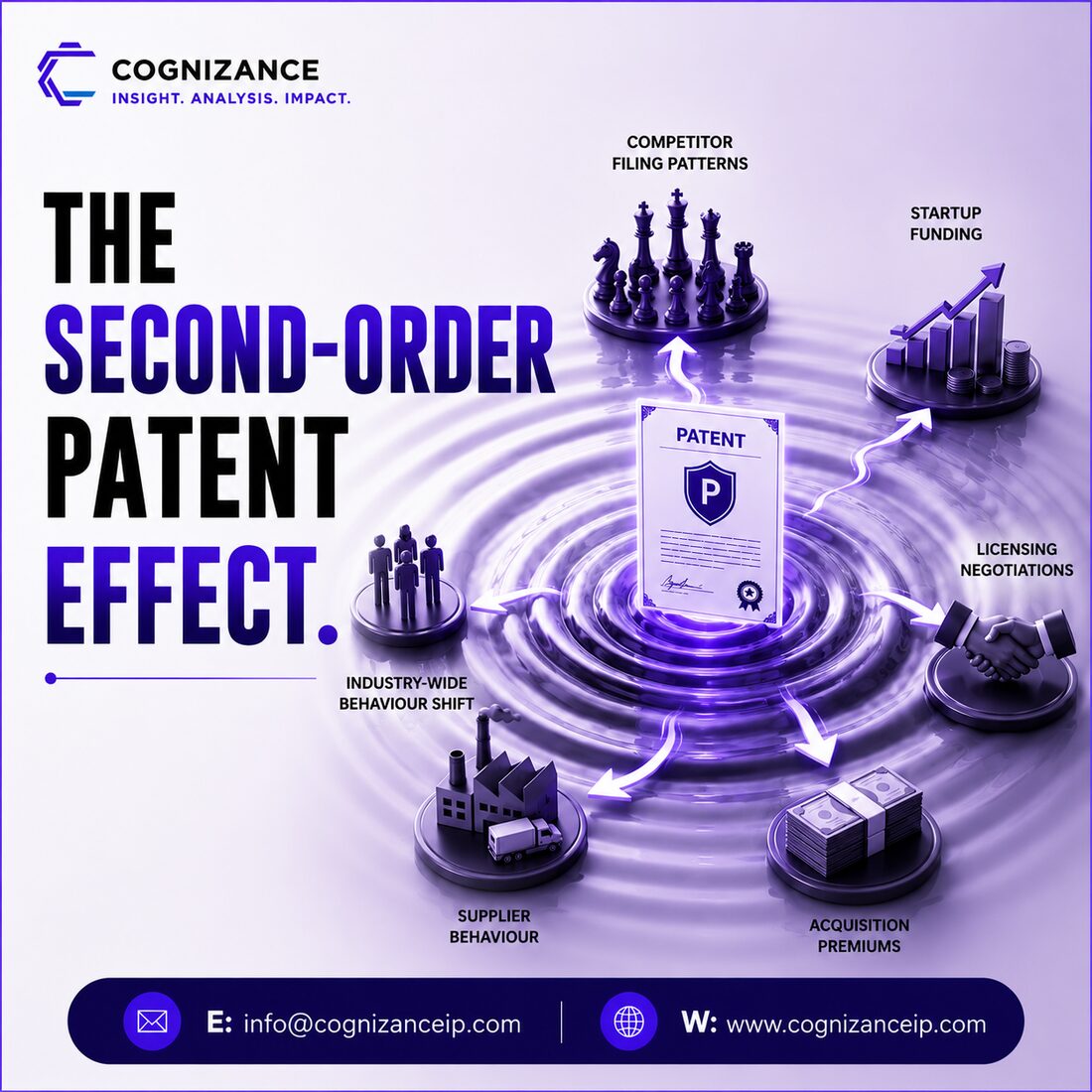
First-order thinking on patents looks like this. Patent filed. Patent granted. Move on. Second-order thinking asks a harder question: how will this change supplier behaviour, licensing negotiations, startup funding, competitor filing patterns and acquisition premiums?
Watch one real event ripple outward. In 2006, Apple pays Creative Technology $100 million to settle a patent fight over the iPod's menu system. Steve Jobs gathers his team afterward and gives one order: patent everything, even features Apple might never ship.
Competitor filing patterns. By 2011, according to a Stanford analysis reported by the New York Times, the smartphone industry had spent $20 billion on patent litigation and patent purchases in two years alone.
Startup funding. Vlingo, a voice recognition startup, got sued by Nuance. It won the case. The win still cost $3 million and forced Vlingo to sell itself anyway.
Licensing negotiations. Apple's slide-to-unlock and touch patents pushed HTC into a confidential license deal, and led a jury to hand Apple $1.05 billion after it sued Samsung in 2011.
Acquisition premiums. Google paid $12.5 billion for Motorola Mobility in 2011. By Google's own account, $5.5 billion of that price was for the patents alone.
Supplier behaviour. Samsung was Apple's own component supplier while Apple sued it. In the years after, Apple steadily shifted chip production toward TSMC.
That same year, for the first time in history, Apple and Google spent more money on patent lawsuits and patent purchases than on research and development of new products.
Most people evaluate a patent by what it says. We evaluate it by what it sets in motion next.